
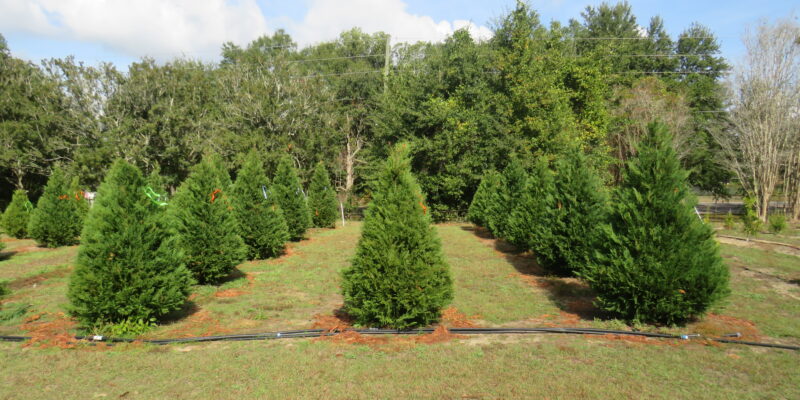
MONTGOMERY, Ala. – The Alabama Department of Agriculture and Industries (ADAI) is proud to announce the success of a project designed to strengthen and modernize Christmas tree production across the state. As part of a large fertilizer trial conducted by Auburn University’s Department of Horticulture at the Gulf Coast Research and Extension Center in Fairhope, Alabama-grown Christmas trees were donated to Marines and their families at Marine Corps Air Station Cherry Point in North Carolina.
Funded by USDA’s Specialty Crop Block Grant (SCBG) and administered by ADAI, this initiative was created to improve production practices for Alabama tree farms while also giving back to those who serve. Through the project, more than 200 Christmas trees were donated to military families.
“Many of our Christmas tree growers are part-time farmers or veterans who have served our country with honor. Now, they’re serving their communities by bringing families together during the holidays,” said Alabama Commissioner of Agriculture and Industries Rick Pate. “We’re planting more than just trees; we’re planting hope, economic growth, and holiday joy.”
The Ornamental Horticulture Research Center in Mobile and the Gulf Coast Research and Extension Center in Fairhope partnered with the Christmas Spirit Foundation, FedEx, and the Trees for Troops program to coordinate the pickup and delivery of Alabama-grown Christmas trees. Last season alone, Trees for Troops delivered more than 16,000 trees from 51 locations to 93 military bases across all five branches of service. A special thank you goes to Steve and Sandra Mannhard of Fish River Trees for contributing an additional 50 trees in support of this effort.
“Several people across the two experiment stations have contributed to this incredibly rewarding project. This work means so much because the results will ultimately help growers not only here in Alabama but throughout the Southeast,” said Auburn University Assistant Extension Professor Jeremy Pickens Ph.D. “These trees are headed to the men and women serving our country. As we gather around our own Christmas trees this season, we’ll be imagining these trees bringing a little joy and comfort to those Marines.”
This project arrived at a critical moment, as demand for natural Christmas trees continues to increase. Across the southern U.S., growers report that producing a seven-to-eight-foot marketable tree can now take three to six years. By targeting reductions in production time, this project aims to show how growers could increase gross profits by as much as $8,800 per acre annually, while also lowering input costs through fewer years of pruning, fertilizing, and spraying. Final profit estimates will be refined as data collection continues.
To support these gains, the project focused on improving weed management and optimizing fertility. Researchers evaluated how long residual preemergent and selective herbicides can reduce the number of annual applications from as many as eight to just three saving valuable time and labor for these growers. The project also examined optimal nitrogen rates, application timing and delivery methods including banding, fertigation, and drip irrigation to update outdated recommendations and further enhance production efficiency.
Local Christmas tree farms in Alabama can be found at southernchristmastrees.org/AL-Farms.html.
Learn more about the Trees for Troops program at treesfortroops.org/trees-for-troops.