
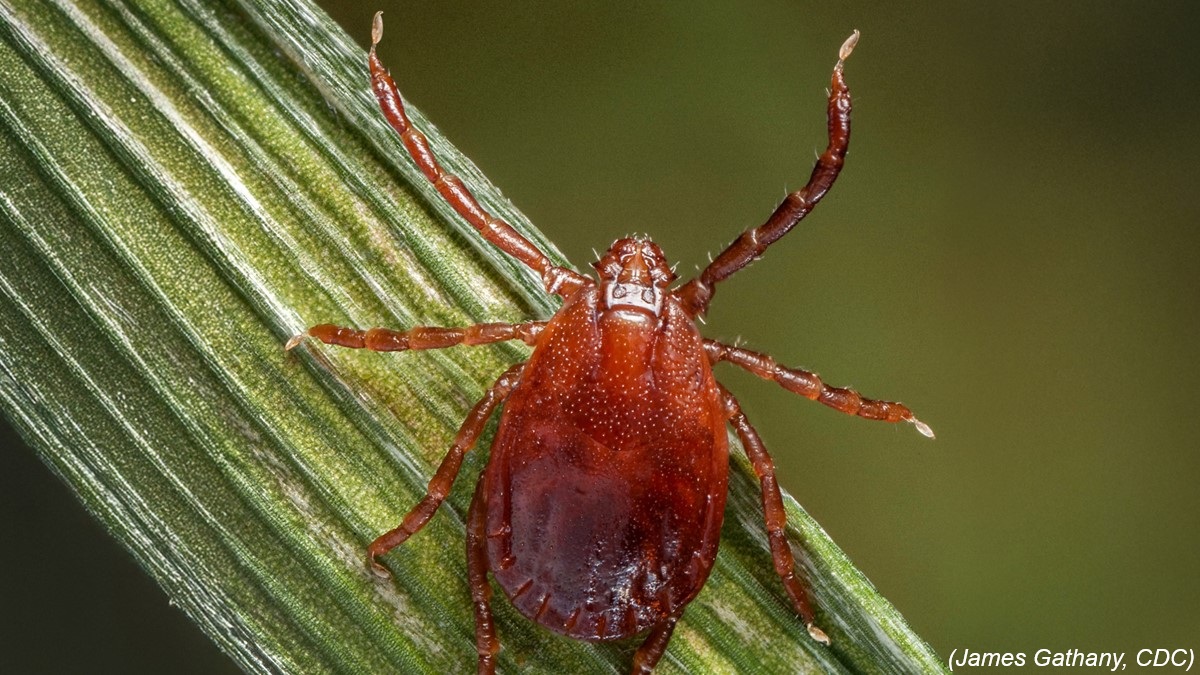
The Asian longhorned tick (Haemaphysalis longicornis) is native to eastern Asia but was first confirmed in the United States by the USDA in 2017. As of April 2026, it has been detected on a dog in DeKalb County and reported in 24 eastern states. This tick alternates between hosts and the environment, feeding on humans, domestic animals, and wildlife. It is a confirmed vector of Theileria orientalis (a significant livestock pathogen) and can also transmit Rickettsia rickettsii (Rocky Mountain spotted fever) and Heartland virus.
Asian longhorned ticks are light brown and extremely small—often smaller than a sesame seed—making them hard to detect. A fully engorged female is only about pea-sized. Males are rare; females can reproduce without mating, laying 1,000‒2,000 eggs at a time, so a single tick can establish a new population. Heavy infestations can place severe stress on animals, reducing growth and production, and in extreme cases causing death from blood loss.
Farmers should regularly inspect livestock for ticks, especially on the head and neck, as well as the flanks, back, armpits, groin, and under the tail. Larvae, nymphs, and adults may be present on the same animal. Animals showing low weight gain, lethargy, anemia, patchy hair coat, or poor condition should be checked closely. Even a few ticks can transmit disease. Preventive measures include keeping grass and weeds trimmed, clearing brush, and using acaricides. Unusual or heavy infestations should be reported to your veterinarian, local extension agent, diagnostic lab for species identification, and to the State Veterinarianʼs Office (334-240-7255).
Learn more about the ALT: https://www.aphis.usda.gov/livestock-poultry-disease/cattle/ticks/asian-longhorned